
Programmable vs. Smart Thermostats: What Is the Difference?
Compare how each type is set up and used so you can pick the thermostat that fits your household routine.
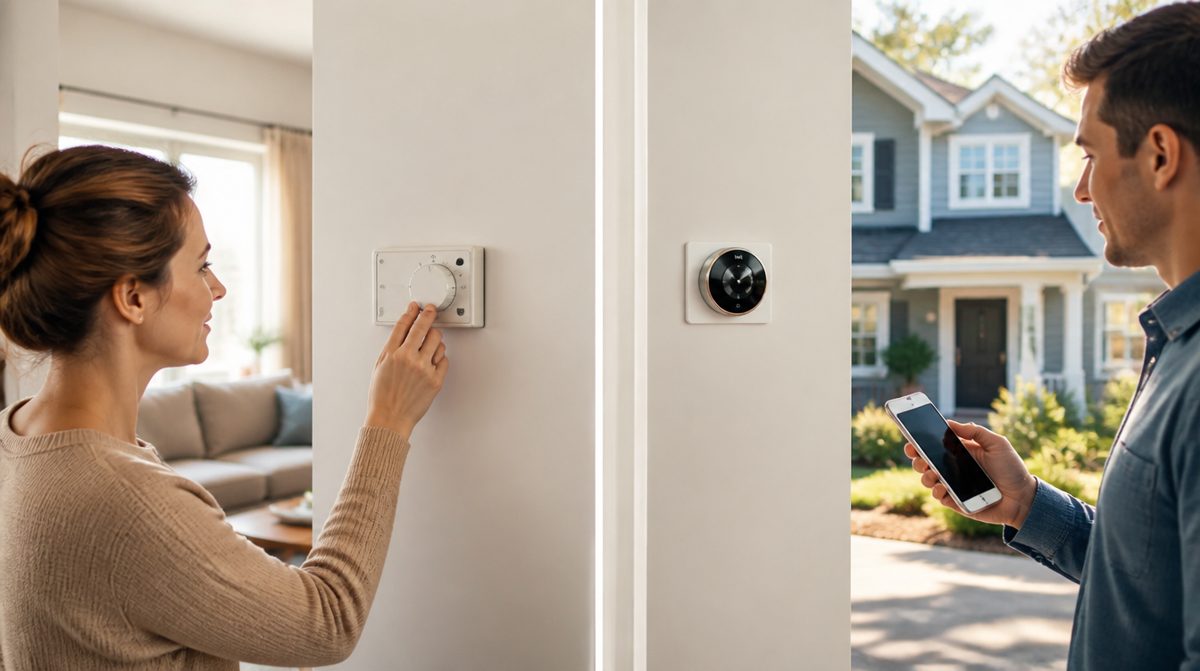
The thermostat is the control center for heating and cooling, and the model you choose affects both comfort and convenience. Programmable and smart thermostats both aim to reduce unnecessary runtime by adjusting temperatures when you are asleep or away, but they work differently. This comparison explains the practical differences without hype.
Programmable Thermostats
A programmable thermostat lets you set a schedule that repeats on a regular pattern, such as one temperature in the morning, another while you are at work, another in the evening, and another overnight. Many offer separate weekday and weekend schedules. Once programmed, they run on their own without a phone or internet connection.
Advantages:
- Simple, familiar controls on the wall
- No Wi-Fi or app required
- Reliable operation for households with a predictable routine
- Typically less complicated to install and use
Drawbacks:
- The schedule is fixed unless you change it by hand
- Menus can be awkward, and many people never set them up properly
- No remote adjustments when plans change
- Limited feedback about how your system is running
Smart Thermostats
A smart thermostat connects to your home Wi-Fi so you can control it from a phone, tablet, or voice assistant. Many can learn patterns, detect when no one is home, and adjust accordingly. They may also provide runtime reports, filter-change reminders, and alerts if temperatures swing beyond a range you set.
Advantages:
- Remote control from anywhere with an internet connection
- Flexible scheduling that is easy to change on a touchscreen or app
- Helpful reminders and system information
- Possible integration with other smart home devices
Drawbacks:
- Depends on Wi-Fi, accounts, and software updates
- May require a common wire, sometimes called a C-wire, that not every home has
- More features can mean more setup and a learning curve
- Privacy considerations, since the device may collect usage data
Compatibility Matters
Before you buy either type, confirm that it works with your heating and cooling equipment. Systems differ, including single-stage and multi-stage equipment, heat pumps, and baseboard electric heaters that use higher voltage. Using a low-voltage thermostat on a high-voltage system can create a hazard. Turn off power at the breaker before touching any thermostat wiring, take a photo of the existing wires before disconnecting them, and consider hiring a licensed HVAC professional if anything looks unfamiliar.
How Savings Really Happen
Neither device saves energy by itself. Savings come from using setback temperatures when you are asleep or away, and from not overriding the schedule constantly. A programmable thermostat that is properly set can work well, and a smart thermostat that is ignored will not do much. The device that gets used correctly is the one that helps most.
Which Should You Choose?
Choose a programmable thermostat if you have a steady routine, want simplicity, and are not interested in apps. Choose a smart thermostat if your schedule changes often, you want remote access, or you like detailed information about your system. Either way, set a comfortable range, avoid extreme swings, and check your equipment's guidance for recommended settings.
Setup Tips for Either Type
Whichever model you choose, take a few minutes to set it up well. Pick a small number of schedule periods that match how your household really lives, and avoid setting temperatures so far apart that the system runs hard to catch up. Test the thermostat after installation by switching between heating and cooling modes and confirming that the equipment responds. Keep the manual somewhere easy to find, and replace batteries in battery-powered units on a regular schedule.
Takeaway: Programmable models are simple and dependable, while smart models offer flexibility and remote control. Confirm compatibility first and choose the one you will actually use.