
Fit Mistakes to Avoid When Buying Pants
Seven common sizing and fit errors that make pants uncomfortable, and what to look for in the fitting room instead.
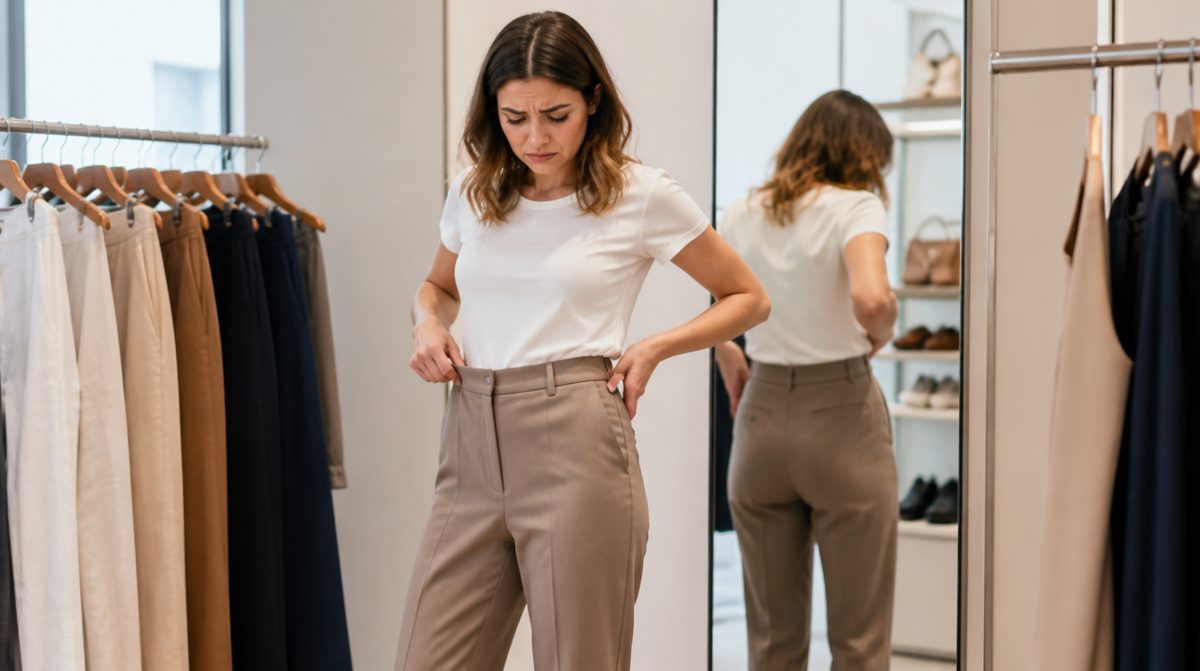
Pants are among the hardest garments to fit, because they must work at the waist, hips, thighs, rise and length all at once. It is no surprise that many people own pairs they rarely wear. Most fit problems come from a handful of predictable mistakes. Knowing them ahead of time makes the fitting room far less frustrating.
Mistake One: Shopping by Size Number Alone
Sizes are inconsistent across makers and even across styles from the same maker. A number that fit last year may not fit now. Ignore the label while you try things on and focus on how the pants feel. Bring several sizes into the fitting room, and be willing to go up or down without attachment to the number.
Mistake Two: Fitting Only the Waist
A waist that closes comfortably does not guarantee good fit. If the hips or thighs pull, or the seat sags, the pants will look off. Fit the widest part of your body first, since a waistband can be altered by a tailor far more easily than hips or thighs. Look for smooth fabric without strain lines radiating from the crotch or pockets that gape open.
Mistake Three: Ignoring the Rise
The rise is the distance from the crotch seam to the waistband. A rise that is too short can feel like it is constantly sliding down, and one that is too long can bunch at the stomach. Sit, bend and squat in the fitting room to test comfort. The right rise stays put without digging in.
Mistake Four: Skipping the Sit Test
Pants that feel good standing can be uncomfortable sitting. Check whether the waistband cuts into your stomach, whether the fabric pulls across the thighs and whether the back gapes when you lean forward. If you will wear them to a desk or on a plane, this test matters most.
Mistake Five: Leaving the Length Unchecked
Hems that drag on the floor wear out quickly and look sloppy, while hems that are too short may look unintended. Try the pants on with the shoes you plan to wear. Trousers typically touch the top of the shoe with a slight break, while cropped styles end clearly above the ankle. A tailor can adjust length simply, so do not reject a good fit because of a long hem.
Mistake Six: Forgetting the Fabric
Stiff fabrics need more room than stretchy ones. A fabric with no give may feel fine for a minute but tighten after a meal or a long day. Stretch fabrics can relax and loosen after wearing, so a snug fit at first may be correct. Check the fiber content and think about how it will behave over a full day.
Mistake Seven: Buying Hopeful Sizes
Buying pants a size too small as motivation, or a size too large to hide, rarely works. Clothes that fit your body today make you more likely to wear them. If your body changes later, you can adjust or replace.
What Good Fit Looks Like
- The waistband sits flat without gapping or digging in
- The seat smooths over without pulling or sagging
- The thighs have room to move without tight horizontal lines
- The leg line falls straight or follows the cut intended by the style
- The hem hits a flattering spot with your shoes
- You can walk, sit and bend freely
When to Visit a Tailor
Hems, waist adjustments and sometimes leg tapering are simple, common alterations. Seat and thigh changes are harder and cost more. If a pair fits in the widest areas and needs only a modest tweak, alterations can make a good pair great. Ask your tailor what is realistic before purchase when possible.
Takeaway: Fit the hips and thighs first, test rise and sitting comfort, and let a tailor handle length and waist. Ignoring the number on the label leads to pants you will actually wear.