
Fall Gutter and Roof Inspection Checklist
A walk-around checklist for catching drainage and roofing problems before winter weather arrives.
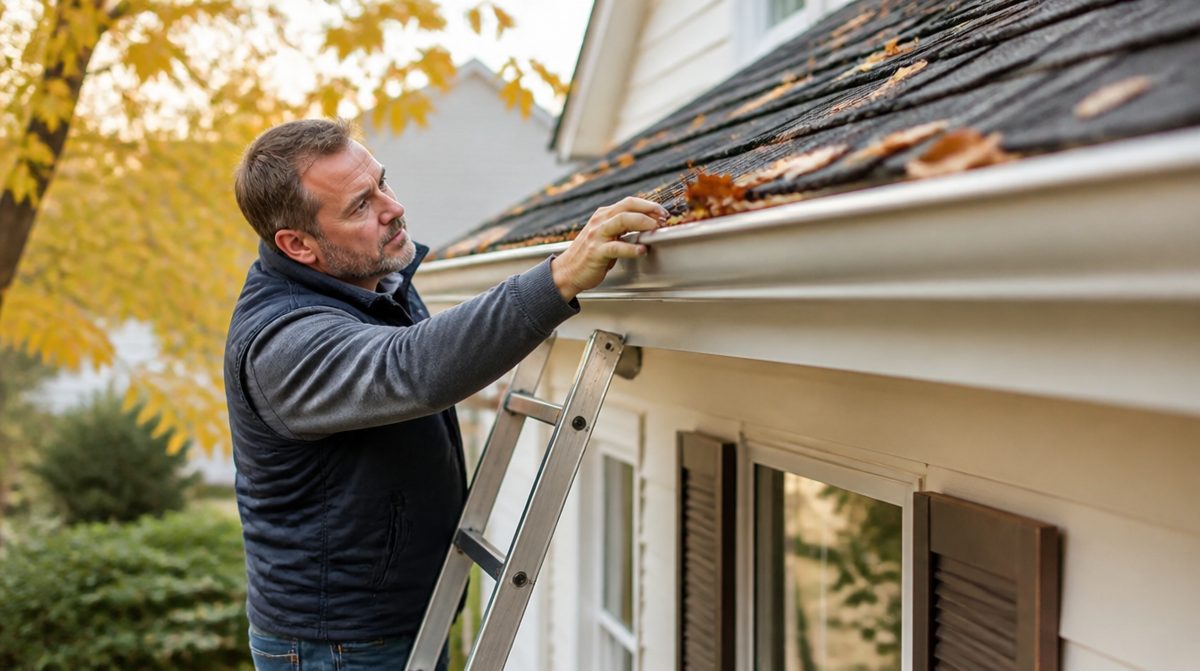
Autumn is the best time to look over the parts of your house that handle water. Once leaves have dropped and before snow or heavy rain arrives, a short inspection can reveal small problems while they are still inexpensive to fix. This checklist is organized so you can work from the ground up, and it is designed to be done mostly from the ground with binoculars.
Safety First
- Do not climb onto a roof unless you are trained and equipped to do so. Inspecting from the ground or from a stable, correctly placed ladder is safer.
- Keep ladders away from power lines and set them on firm, level ground.
- Never work on a wet, icy, or windy day.
- Ask a helper to steady the ladder and stay nearby.
If a task feels risky, hire a licensed, insured contractor. A roof is not the place to take chances.
Gutter Checklist
- Remove leaves, twigs, and debris from every gutter run, starting at the end farthest from the downspout.
- Flush the gutters with a hose and watch that water moves freely to the downspouts.
- Look for sagging sections, pulled-away brackets, or loose spikes.
- Check seams and corners for drips or rust stains.
- Make sure the slope guides water toward the downspouts rather than letting it pool.
- Tighten or replace loose fasteners.
- Confirm that gutter guards, if you have them, are seated and not packed with debris.
Downspout and Drainage Checklist
- Check that each downspout is clear by running water through it.
- Confirm that extensions or splash blocks direct water several feet away from the foundation.
- Look at the soil near the foundation, which should slope away from the house rather than toward it.
- Clear leaves from nearby storm drains or yard drains.
- Look for erosion, standing puddles, or soil washed out near downspout outlets.
Roof Checklist
- Scan for missing, cracked, curled, or lifted shingles or tiles.
- Look for granules collecting in gutters, which can be a sign of an aging roof surface.
- Check flashing around chimneys, vents, skylights, and where roof planes meet.
- Look at the sealant around vent pipes for cracks.
- Note any moss, algae, or heavy debris that holds moisture.
- Check for sagging areas, which could indicate a structural issue.
- Trim branches that touch or hang over the roof.
Inside the House
A good fall inspection continues indoors. Check the attic for daylight coming through the roof deck, stains on rafters or sheathing, damp insulation, or musty smells. Look at ceilings, especially below roof valleys and near chimneys, for new stains. Make a note of anything that seems different from last year and take photos for reference.
What to Do With Your Findings
Minor tasks like clearing gutters, tightening fasteners, and trimming branches are reasonable for most homeowners. Replacing flashing, repairing shingles on a steep roof, or addressing structural sagging should be handled by a licensed roofer. When you request quotes, get more than one, ask about warranties on workmanship, and keep copies of any paperwork. Check your homeowner's policy or ask your insurance agent about what is and is not covered, since coverage differs from one policy to another.
Consider setting a recurring reminder for a second check in late winter or early spring, and an extra look after any major storm.
Takeaway: Clear the gutters, confirm that water leaves the house cleanly, and scan the roof for early wear. A methodical fall check keeps small issues from becoming winter emergencies.