
Circuit Breakers and Your Electrical Panel, Explained
What breakers do, why they trip, and what is safe for a homeowner to do versus what needs a licensed electrician.
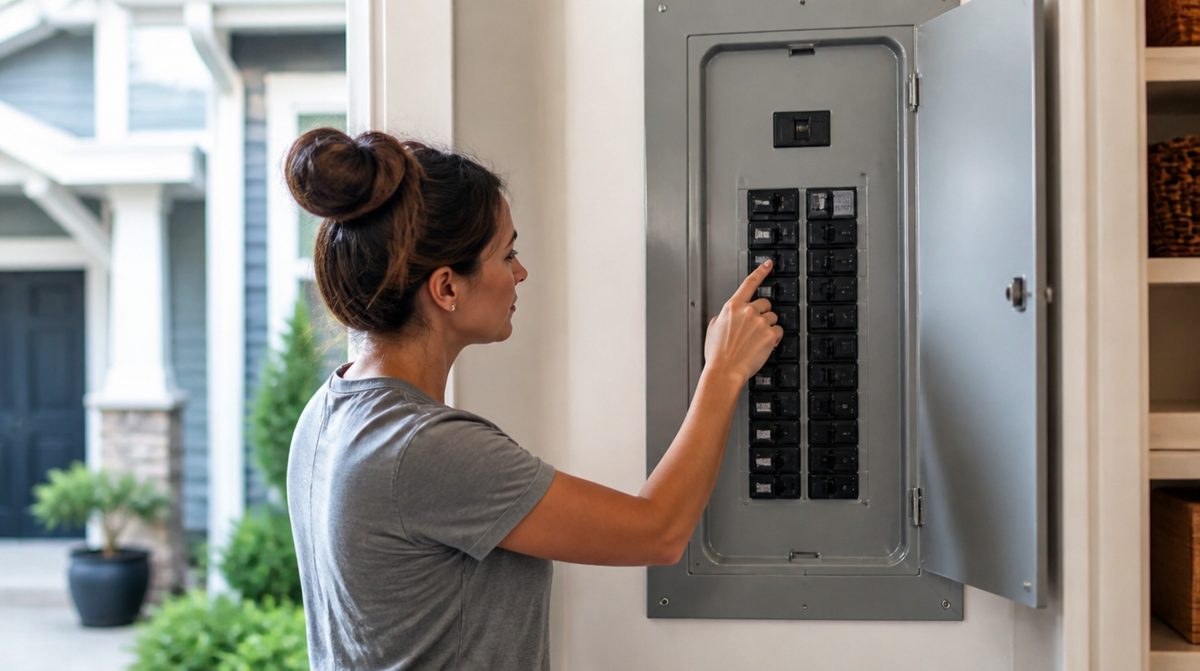
The electrical panel is the metal box, often in a garage, basement, or utility closet, that distributes power throughout the house. Understanding what it does helps you respond calmly when a breaker trips and know when a problem is beyond a do-it-yourself fix. This guide covers the basics and is not a substitute for advice from a licensed electrician, since electrical work carries real risk of shock and fire.
What a Circuit Breaker Does
Each breaker protects a circuit, which is a loop of wiring serving a group of outlets, lights, or an appliance. Wires can only carry so much current safely. If too much flows, the wiring heats up, which can damage insulation and start a fire. A breaker is a safety switch that opens automatically when current exceeds its rating, cutting power to that circuit. Its job is to protect the wiring, not the devices plugged into it.
Why Breakers Trip
- Overload. Too many devices on one circuit, or one high-demand appliance, draw more current than the circuit is designed for.
- Short circuit. A hot wire touches a neutral or another hot wire, causing a sudden surge of current.
- Ground fault. Current escapes through an unintended path, such as water or a person.
- Arc fault. A damaged cord or loose connection creates sparking that can ignite nearby materials.
- Aging or faulty breakers. A breaker that trips repeatedly with little load may be worn out.
Special Types You May See
Ground-fault circuit interrupter protection, usually shortened to GFCI, is common in kitchens, bathrooms, garages, and outdoor spaces. It senses small imbalances in current and shuts power off very quickly to reduce the risk of electric shock. It may be built into an outlet with test and reset buttons or into a breaker. Arc-fault circuit interrupter protection, or AFCI, detects dangerous arcing in wiring and is often required in bedrooms and living areas in newer homes. Requirements vary by location and by the date a home was built or wired, so check with a licensed electrician or your local building department.
What to Do When a Breaker Trips
- Unplug or turn off devices on the affected circuit.
- Find the tripped breaker, which usually sits in a middle position between on and off.
- Push it fully to the off position, then back to on.
- Add devices back one at a time, noting if one causes the trip.
- If it trips again immediately, leave it off and have it checked.
Dry hands and dry footing are essential. Stand to the side of the panel and use one hand when flipping a breaker.
Warning Signs, Dos, and Don'ts
- Buzzing, crackling, or sizzling sounds from the panel
- A burning smell or scorch marks
- A panel that feels hot or looks rusty or damp
- Lights that flicker or dim when appliances start
- Breakers that will not reset or that trip repeatedly
- Outlets that feel warm or show discoloration
If you notice any of these, avoid using the circuit and call a licensed electrician promptly. If you smell smoke or see flames, leave the home and call emergency services.
What Not to Do
Never remove the panel cover to poke around unless you are qualified. Never replace a breaker with a larger one to stop it from tripping, because that defeats the protection and can create a fire hazard. Avoid taping a breaker in the on position or overloading power strips and extension cords.
Helpful Habits
Label every breaker clearly, ideally by room and use. Test GFCI outlets monthly using their test buttons. Spread high-demand appliances across different circuits, and consider asking an electrician about adding circuits if you rely on many extension cords.
Takeaway: Breakers protect wiring from overheating, and tripping is a signal worth respecting. Reset once after reducing the load, and call a licensed electrician if the problem returns.