
How to Check and Set Your Tire Pressure at Home
A simple step-by-step routine for measuring and adjusting tire pressure with a basic gauge.
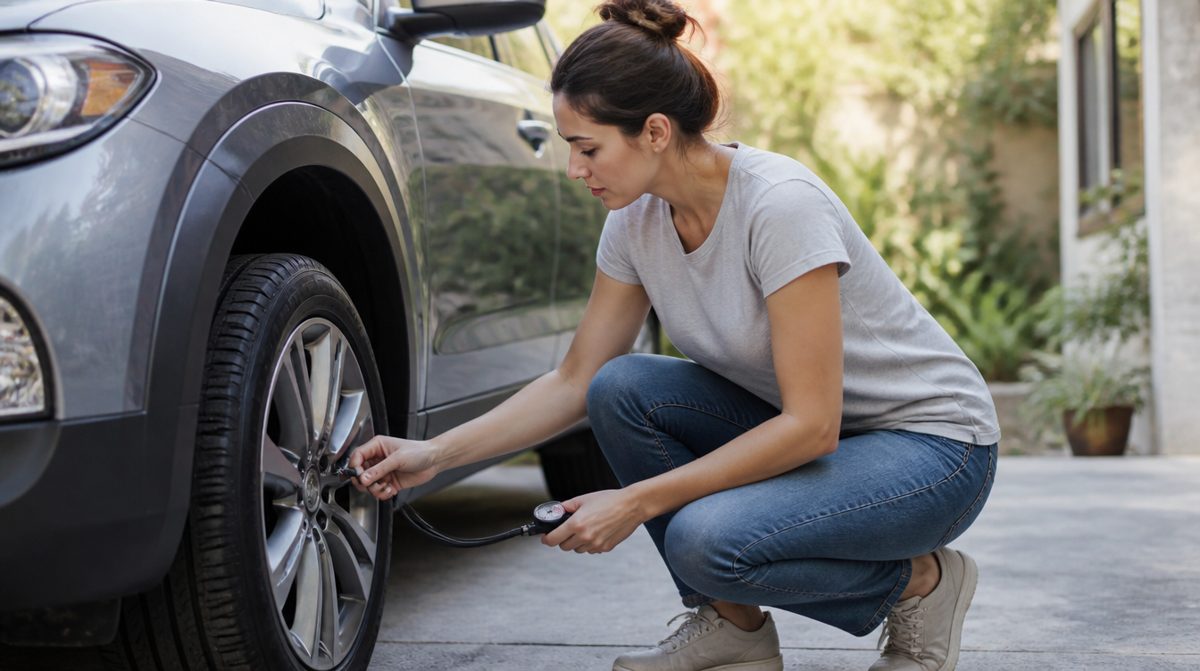
Tire pressure is one of the easiest things to check and one of the most commonly ignored. Properly inflated tires wear more evenly, handle more predictably, and help your car use fuel efficiently. The whole job takes about ten minutes and needs only a pressure gauge and access to an air source. Here is how to do it right.
What You Need Before You Start
A reliable gauge matters more than a fancy one. Digital gauges are easy to read, while simple pencil-style gauges are compact and inexpensive. Whichever you pick, keep it in the glove box so it is always handy. You will also need access to an air compressor, either a small portable unit or the one at a local gas station.
- A tire pressure gauge you trust
- An air compressor or station air hose
- A small notepad or your phone to record readings
- Your owner's manual or the door-jamb sticker
How to Check and Adjust Your Tires
- Find the correct pressure. Look for the placard on the driver's door jamb or check the owner's manual. Use that number, not the maximum figure printed on the tire sidewall, which is a limit for the tire and not a recommendation for your car.
- Check when the tires are cold. Measure before driving, or after the car has sat for a few hours. Driving heats the air inside the tires and gives a falsely high reading.
- Remove the valve cap. Put the cap in your pocket so it does not roll away.
- Press the gauge onto the valve stem. Push firmly and straight until the hissing stops, then read the number. Repeat once if the first reading seems off.
- Add air if the reading is low. Press the air hose onto the valve in short bursts, then recheck with your gauge. The built-in gauge on many compressors is not very precise, so confirm with your own.
- Release air if the reading is high. Press the small pin in the center of the valve with a fingernail or the back of the gauge for a second or two, then recheck.
- Replace the cap and repeat on every tire. Do not forget the spare if your car has one, since a flat spare is no help on the day you need it.
Common Questions About Tire Pressure
How often should I check?
A good habit is to check once a month and before any long trip. Pressure naturally drops over time, and it can change noticeably when the weather gets colder. A tire that looks fine can still be well below the recommended level, so do not rely on a visual check.
What if the warning light comes on?
Many modern cars have a tire pressure monitoring system that lights up when one or more tires are significantly low. Treat it as a prompt to check all four tires with a gauge. If you add air and the light stays on, or it returns within a few days, you may have a slow leak or a sensor issue that a tire shop can diagnose.
Does the load I carry matter?
Some vehicles list different pressures for normal and heavy loads. If you are hauling passengers and luggage for a road trip, check the placard or manual for any adjustment, and set pressures accordingly.
Signs Your Pressure Is Off
- The center of the tread wears faster than the edges, which can point to overinflation.
- The outer edges wear faster than the middle, which can point to underinflation.
- The steering feels heavy or the car pulls to one side.
- One tire looks noticeably flatter than the others when parked on level ground.
The takeaway: a monthly pressure check with your own gauge is a small habit with a big payoff in safety, tire life, and fuel economy. Use the door-jamb number, measure cold, and adjust one tire at a time.